
Mission Overview
Contents
The ARRAKIHS Mission
Mission Timeline
ARRAKIHS Consortium
The ARRAKIHS Mission
Analysis of Resolved Remnants of Accreted galaxies as a Key Instrument for Halo Surveys (ARRAKIHS) is an ESA F-class mission (F2) designed to address a central Cosmic Vision question: how galaxies assemble their mass and structure through hierarchical accretion. By targeting the extremely faint stellar outskirts of nearby galaxies, ARRAKIHS will provide the first statistically robust and homogeneous census of stellar halos and low–surface–brightness features (LSBFs) around Milky Way-mass galaxies beyond the Local Group.
The faint outskirts of galaxies preserve a fossil record of their assembly history. Stellar halos, tidal streams, shells, and diffuse envelopes encode information on the frequency, mass spectrum, and timing of past accretion events, as well as on the interplay between galaxy assembly, baryonic physics, and dark matter halos.
Existing surveys are limited by systematic effects and insufficient surface-brightness depth. ARRAKIHS is designed to overcome these limitations by reaching surface-brightness levels of approximately 31.5 mag/arcsec² in the visible bands, enabling the detection and characterization of structures significantly fainter than those accessible to current wide-field surveys.
ARRAKIHS will observe a statistically representative sample of at least 80 nearby Milky Way-mass galaxies, selected from a homogeneous, volume- and mass-limited target pool in the local Universe. The survey strategy employs repeated visits, arcminute-scale pointing offsets, and arcsecond-scale dithering to optimise depth, sampling, and calibration while suppressing instrumental and environmental systematics. This approach ensures uniform data quality across the survey and enables robust comparative studies of galaxy assembly across a wide range of environments.
The payload comprises a four-band wide-field imaging system providing continuous wavelength coverage from 280–1600 nm, with two visible (VIS1, VIS2) and two near-infrared (NIR1, NIR2) channels.
The instrument is based on two binocular telescopes with a modified Maksutov-Cassegrain design and a common field of view exceeding 1.15° in diameter.

The payload design achieves the image quality, thermal stability, and straylight suppression required to ensure that measurements are background limited by zodiacal light, a key requirement for reliable low-surface-brightness science.
Mission performance assessments, supported by end-to-end simulations and dedicated data-reduction pipelines, demonstrate that ARRAKIHS can robustly recover stellar halos and LSBFs at the required depths while controlling systematic uncertainties associated with sky subtraction, scattered light, and point-spread-function wings. The mission will deliver deep, calibrated visible and near-infrared images optimised for low-surface-brightness science, providing a lasting legacy dataset for studies of galaxy formation, dark matter halo structure, and stellar population gradients in galaxy outskirts.
Mission Timeline
ARRAKIHS follows the accelerated development path defined for ESA Fast missions, with a design-to-cost and design-to-schedule approach:
- December 2021: ESA call for Fast (F) missions within the Science Programme.
- November 2022: Selection of ARRAKIHS by the ESA Science Programme Committee as the F2 mission.
- December 2022 – September 2023: Phase 0 study at ESA, culminating in a successful Mission Definition Review.
- 2023 – 2026: (Definition Phase, A/B), including competitive spacecraft definition, payload preliminary and system-level reviews, and preparation for mission adoption. Completion of the payload Preliminary Design Review prior to adoption.
- Mid-2026 (target): Mission adoption by the ESA Science Programme Committee.
- Late 2020s: Mission development and integration (Phases C/D) following adoption.
- End of 2030: Launch into a low-Earth, sun-synchronous orbit.
- Nominal operations: Three years of science operations, with design compatibility for an extension of up to two additional years.
With its focused science objectives, optimized end-to-end system design (from instrument to data processing), and tightly controlled development schedule, ARRAKIHS represents a high-impact, cost-effective mission that will place ESA at the forefront of low-surface-brightness astrophysics and provide transformative insights into the assembly histories of galaxies.
The mission will also deliver a homogeneous legacy dataset for the broader astronomical community, extending beyond its core science goals.
ARRAKIHS Consortium
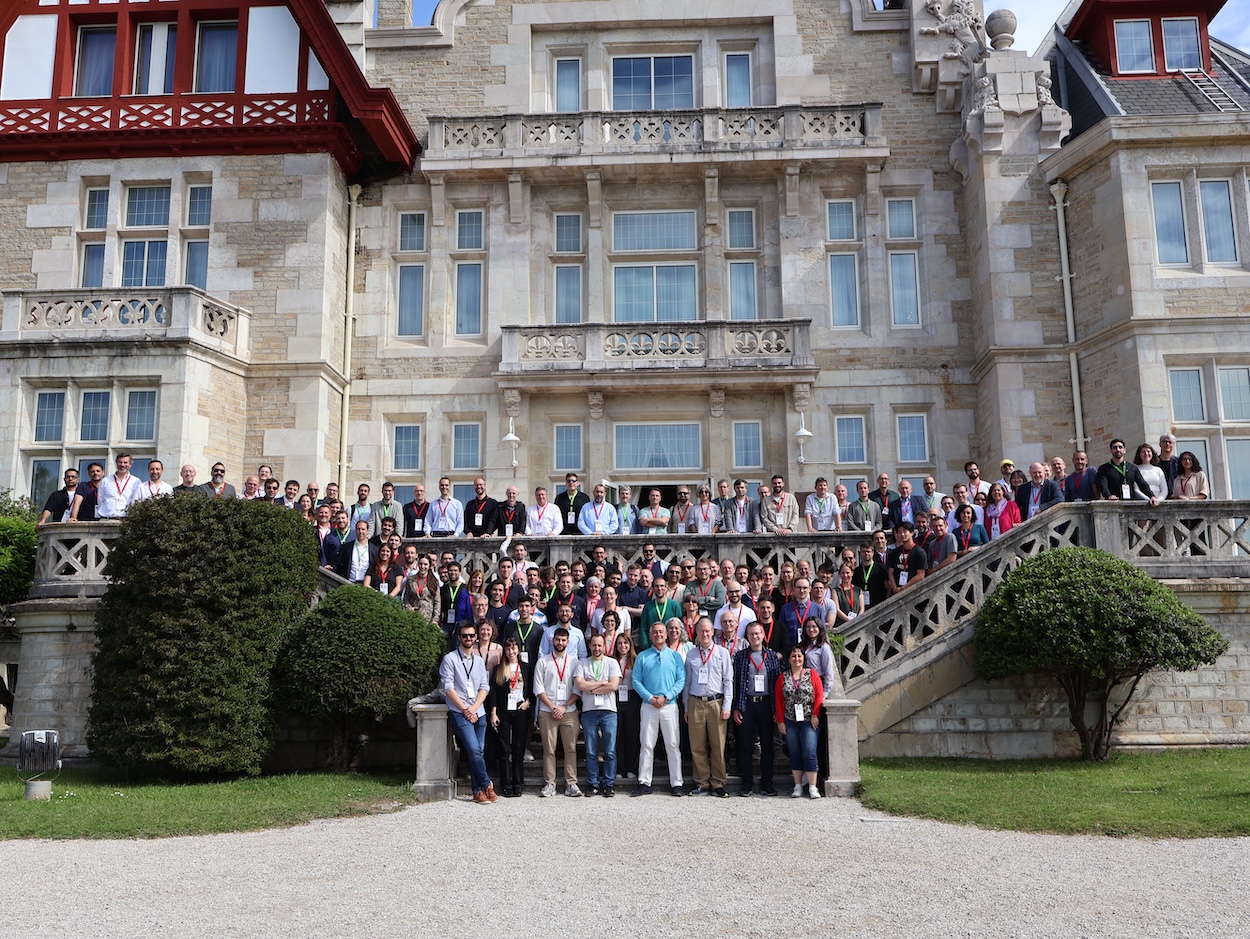
ARRAKIHS is an ESA mission, with the ARRAKIHS Mission Consortium (AMC) serving as the international partnership responsible for the mission’s science, payload (science instrument), Instrument Operations and Science Data Centre (IOSDC), and scientific data exploitation. The AMC is a group of scientists, engineers, PhD students, and management professionals representing research institutions across seven ESA Member States, Spain, Austria, Belgium, Norway, Portugal, Sweden and Switzerland, who collectively fund, design, and operate these core mission elements.
The AMC includes technological companies across Europe, led by Satlantis, the prime contractor for the instrument. Additionally, the consortium incorporates other research institutes and companies from: United Kingdom, the Netherlands, Denmark, the United States, Thailand, and Taiwan.
For a comprehensive breakdown of our organizational framework, governance structure, and specific country work packages, please visit the dedicated ARRAKIHS Consortium Page.